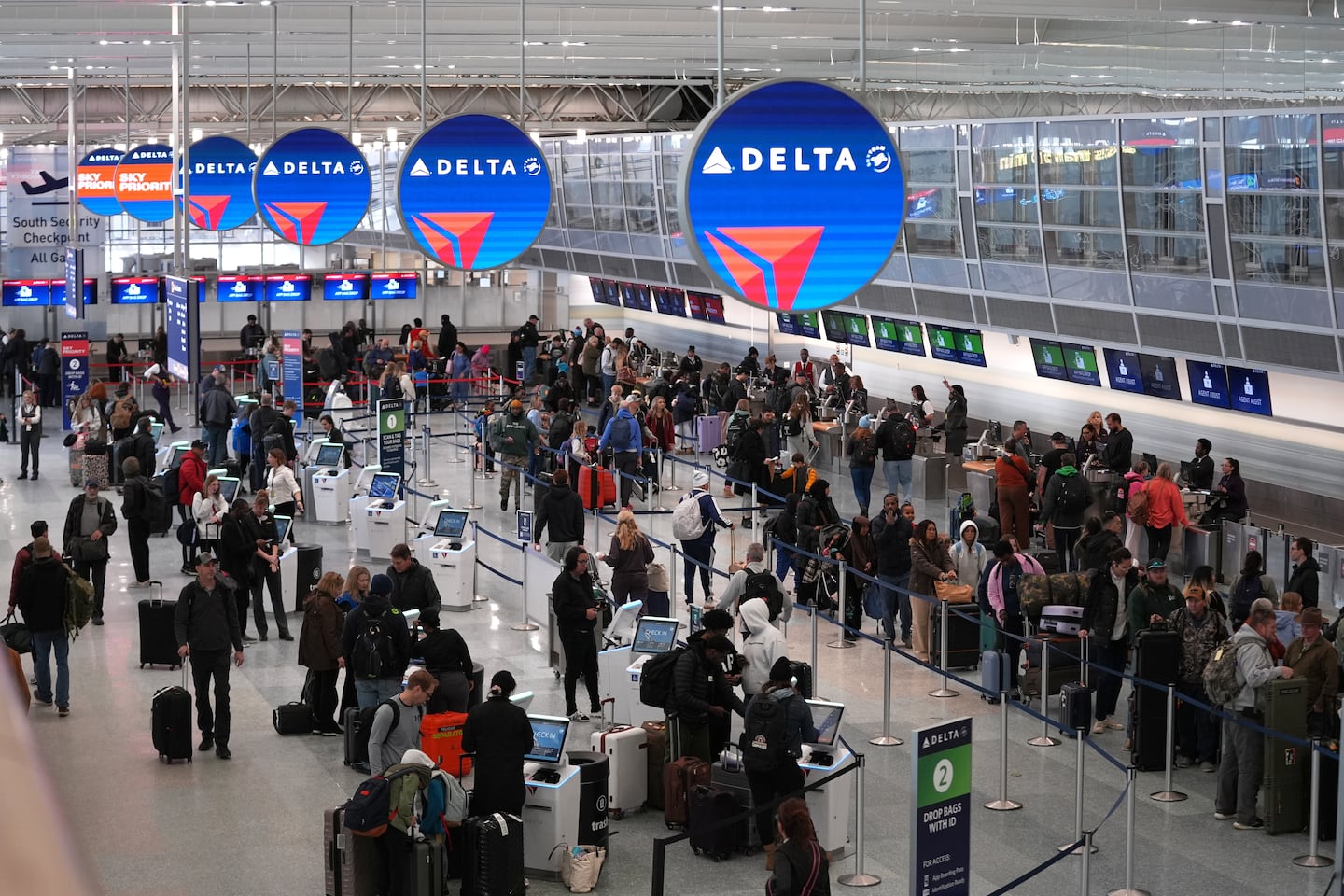

“It’s across all segments, covering corporate, covering international, covering premium leisure, covering main cabin, covering our domestic system,” Delta CEO Ed Bastian said at the JPMorgan 2026 Industrials Conference in Washington. “We’re seeing strength in every market that we look at.”
American expects revenue for the first three months of the year to be up more than 10 percent compared with the same quarter last year, its biggest year-over-year quarterly increase.
Fares are up almost across the board since the war began, according to an analysis of prices by analysts at Deutsche Bank. The price of last-minute flights, in particular, has been on the rise. Those tend to be purchased more often by business travelers.
Last Thursday, the lowest fares for flights the next day to Asia, Europe, and beyond, were about $1,900 on average, according to Deutsche Bank. On the day before the war started, fares for similar last-minute flights to destinations across the Atlantic Ocean were about $830, while those across the Pacific Ocean were about $1,000. Fares for flights from one coast of the United States to the other have risen by a more modest 16 percent.
In most cases, fares for flights 21 days ahead, which also include many leisure travelers, have also risen since the war began. But fares on flights to Mexico were essentially unchanged while those to Latin America were cheaper.
The fare increases are the result of the surging price of jet fuel, which is typically the second-largest operating cost for an airline after labor expenses. Last year, fuel accounted for about 20 percent to 25 percent of operating costs for most large US airlines.
Before the war, the price for jet fuel was around $2.50 a gallon. On Monday, it was $3.78 per gallon, according to Argus Media.
But travelers seem willing to pay more. In a securities filing Tuesday, Allegiant Air’s parent company said that demand “has outperformed expectations” and that it now expected to report a record amount of revenue in the quarter that ends this month.
Airlines can try to adjust to higher fuel costs in various ways, the simplest of which is to raise fares or add fuel surcharges. But airlines have other, more sophisticated ways to respond.
They may choose to increase prices on some fare classes and not others. For example, an airline might raise the price of business class tickets on the presumption that the people who can afford to pay for those seats may not be bothered much by small price increases, while customers in economy may be more put off by higher fares.
American, Delta and United have more customers who can tolerate higher ticket prices, including people traveling for business, to international destinations or in premium seats. Budget airlines, by comparison, tend to sell tickets to people who are more sensitive to prices and could lose some of those customers if they raise fares too much.
Airlines can also adjust the inventory available in each group of fares. If an airline typically sells 20 cheaper, basic economy tickets on a flight, it could lower that to 15, for example, choosing to sell the remaining five as more-expensive regular economy tickets.
Companies can also choose to make up for higher costs elsewhere. They could cut back on flights that are not as profitable. Or they could adjust how often they fly some routes or use more efficient planes on those flights. If fuel prices stay high for a while, airlines might get rid of older, less fuel-efficient planes or make other more permanent changes.
In Europe, many airlines are at least somewhat protected from rising costs because they lock in fuel prices through the use of futures contracts and other hedging techniques. US carriers, however, mostly stopped using such hedges after fuel costs fell more than a decade ago.
Flight costs are up, but travelers aren’t deterred, US airlines say