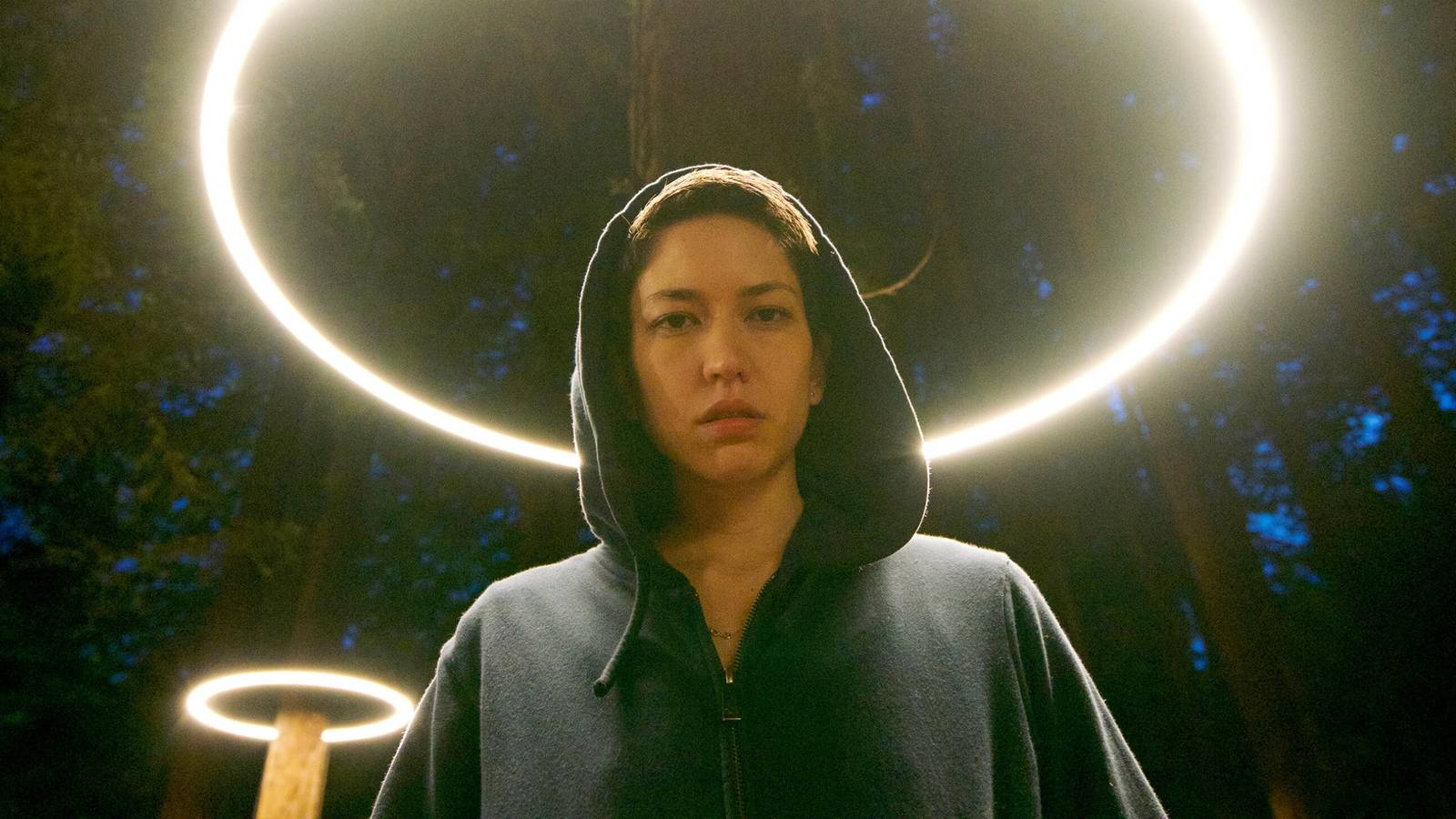

There are many great time travel TV shows, from quintessential sci-fi series Lost to Hulu’s more comedic but obscure take on time travel, Future Man. Most cool time travel conceits have one thing in common: the future is malleable. However, Alex Garland’s haunting sci-fi thriller miniseries Devs completely upends that concept.
Devs Is A Mind-Bending 8-Episode Sci-Fi Series From The Writer/Director Of Ex Machina
Devs stands apart in the crowded sci-fi TV landscape because it feels like a pure extension of Alex Garland’s creative voice. Known for writing and directing Ex Machina and Annihilation, Garland brings the same cerebral intensity to his FX on Hulu series, but expands it across eight episodes, allowing his complex questions more room to breathe.
The result is a story that feels less like a traditional narrative and more like an extended philosophical inquiry. Devs is a hidden sci-fi gem that wrestles with Garland’s favorite themes: determinism versus free will, the fragility of identity, and the unsettling power of technology. But unlike his films, which often build quickly toward visceral climaxes, this series lingers.
Devs takes its time sitting in ambiguity, asking difficult questions without rushing to provide clear answers. That patience makes its eventual descent into hard sci-fi concepts feel both earned and deeply unnerving.
Visually, the series is just as striking. The Devs facility itself — stark, geometric, and almost sacred in its stillness — becomes a haunting symbol of the show’s ideas, reinforcing the sense that something larger and unknowable is at play.
The atmosphere is matched by a quietly powerful cast, led by Sonoya Mizuno, reuniting with Garland, and Nick Offerman in a chilling against-type performance. Supporting turns from Stephen McKinley Henderson, Cailee Spaeny, Alison Pill, and Brian d’Arcy James further elevate a series that feels as intellectually ambitious as it is emotionally haunting.
Devs Inverts The Typical Time Travel Narrative Device
Most time travel stories rely on movement. Characters jump to the past or future, armed with the belief that they can rewrite events and alter outcomes. Franchises like Back to the Future and long-running shows like Doctor Who build their stakes around the idea that time is flexible, and the right intervention can change everything.
Devs takes the opposite approach. Its central piece of technology isn’t a vehicle that transports characters through time, but a system that allows them to observe it. The machine can reconstruct the past and, more unsettlingly, predict the future with increasing precision. Instead of empowering its characters, this knowledge traps them, a shift that completely reframes the genre.
The tension in Devs doesn’t come from paradoxes or the risk of breaking the timeline, but from the possibility that the timeline can’t be broken at all. Time isn’t a playground where choices create new outcomes, but a closed system where every action is part of an unalterable chain of cause and effect.
As a result, the more the characters learn, the less control they seem to have. Seeing the future suggests that their choices were never truly choices to begin with. It’s a quiet but radical inversion of the genre, more akin to Minority Report than anything else, turning time travel into something far more philosophical than adventurous.
Devs Makes The Case For More Sci-Fi Limited Series
Devs was generally well-received by critics, even if some felt the show could be emotionally distant or overly cerebral. However, its premiere in March 2020 was quietly unfortunate. As the COVID-19 pandemic began to dominate daily life, audiences gravitated toward more escapist, easily digestible content, with shows like Tiger King capturing the cultural conversation.
By contrast, Devs is a slow and meditative series asking heavy questions about fate, control, and reality, so it struggled to break through in the same way. It didn’t become a mainstream phenomenon, but its strong critical reception and lingering word-of-mouth have helped it maintain a steady reputation as an underrated, thought-provoking entry in modern sci-fi.
Devs needs just eight tight hours to make a compelling case for why more sci-fi stories should be told as limited series. It poses a range of interesting questions about determinism, free will, and technology, then ends on an intentionally ambiguous note, leaving both its characters and audience unsure how to feel.
On paper, the finale can read as a happy ending, because versions of Lily and Forest are alive, continuing their existence inside the Devs system. But that reality is still governed by code, raising the unsettling possibility that nothing has truly changed. Is it comforting or horrifying? The show never forces an answer.
That ambiguity is exactly why a second season would feel unnecessary, if not outright unsatisfying. Some stories don’t need clean resolutions, and trying to extend them often weakens what made them compelling in the first place. Longer-running sci-fi series like Westworld or Lost prove that bigger and longer isn’t always better, with expanding mythology sometimes diluting the original concept.
Hulu’s 8-Part Sci-Fi Thriller Breaks Every Time Travel Story Rule
RELATED ARTICLES