
Some of the nation’s busiest airports saw hourslong security lines this weekend, as the partial government shutdown begins to hit air travel
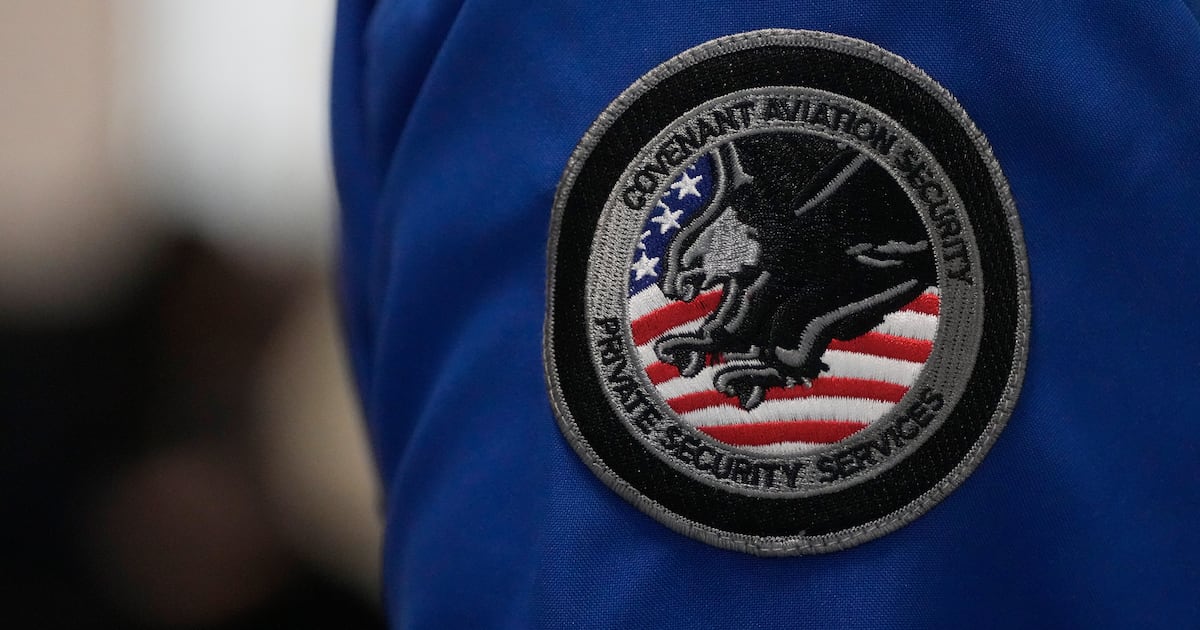
A Covenant Aviation Security Private Security Services patch is shown on an agent at San Francisco International Airport in San Francisco, Friday, Feb. 27, 2026. (AP Photo/Jeff Chiu)
By RIO YAMAT – AP Airlines and Travel Writer
Updated 4 minutes ago
Long security lines snaked into baggage claim areas and parking garages at some U.S. airports this weekend, a possible indicator of more widespread travel problems as the latest government shutdown drags on.
That kind of disruption, while not yet widespread, is not a concern that typically surfaces at San Francisco International Airport, the largest of nearly two dozen U.S. airports where screening checkpoints are staffed by private contractors under a little-used federal program that allows airports to outsource security screenings while maintaining TSA oversight.
Because contractors’ pay comes from a federal contract, it often continues even when the government shuts down.
“The money’s already been allocated, the payments have already been made, and that continues without interruption,” SFO spokesperson Doug Yakel told The Associated Press. “That is a very nice place to be.”
The contrast draws attention to a long-running debate in the aviation industry: Can private contractors operating under TSA oversight provide a stopgap — and shield airport security operations from the political impasses that can disrupt U.S. air travel?
Some aviation experts see the TSA screening program as a potential model for keeping security lines moving with fewer disruptions during shutdowns. At SFO, that system helped maintain screening operations during last year’s record 43-day shutdown, Yakel said.
But critics caution that privatization is not a silver bullet and could introduce new risks. The union representing federal screeners argues that moving operations to private companies could erode job protections and reduce pay and benefits for workers already facing high turnover amid demanding conditions.
How the program works
Established in 2004, TSA’s screening partnership program allows airports to use private security companies chosen by the federal government to run checkpoints while TSA retains authority over procedures and oversight. The agency says private screeners receive the same security background checks as their federal counterparts.
The program “provides needed relief to staffing shortages brought on by a government shutdown,
As another shutdown impacts travelers, some see privatizing TSA screening as a solution