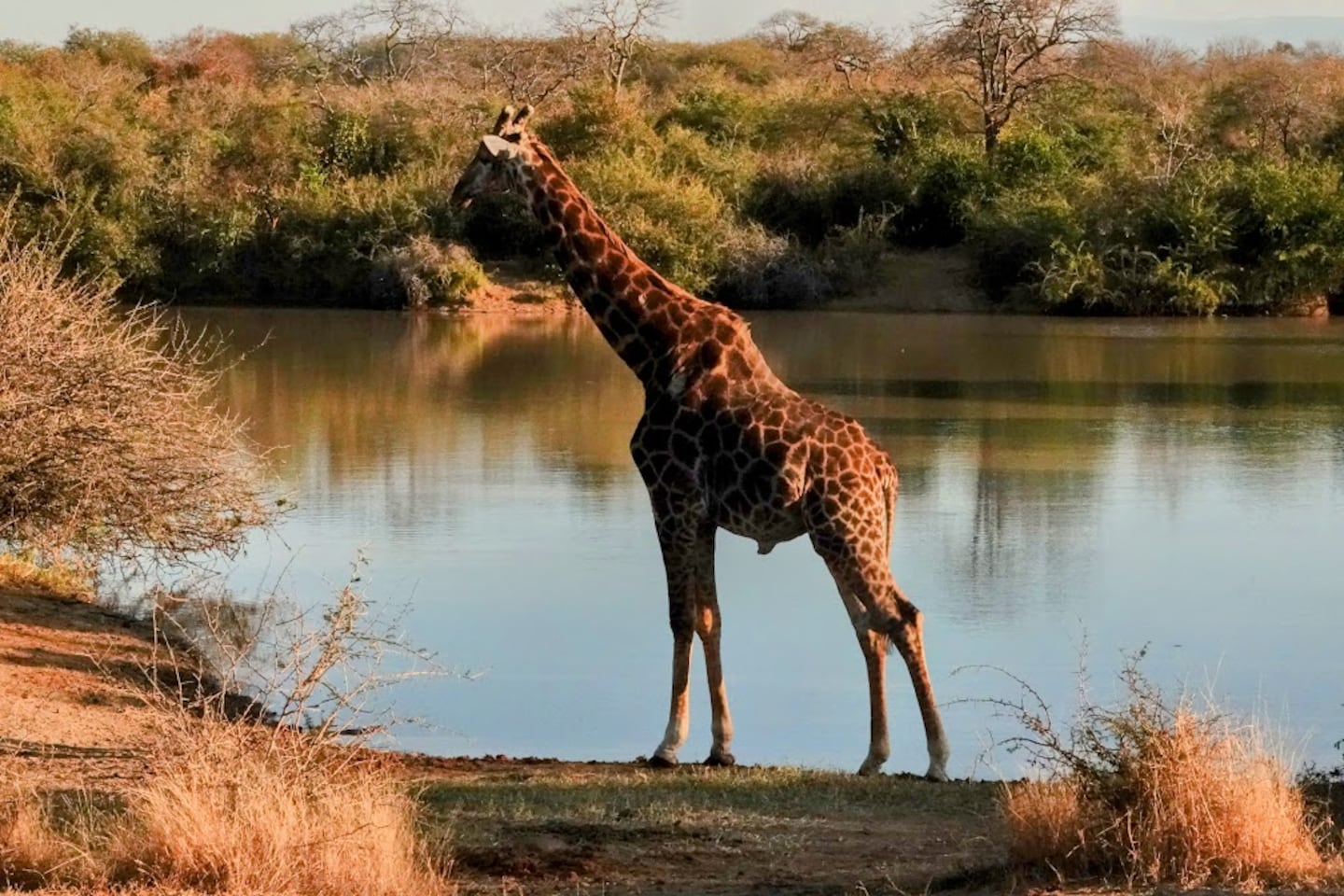

For the RV trip, I rented a Tamron 28-75 wide-angle lens to attach to my Nikon, because my 70-300 telephoto lens wasn’t designed for landscapes and panoramas. For South Africa, I rented an entire camera, a Sony RV-10 that came with a 600mm zoom lens. Both my renting experiences cost less than $200, and were worth every click.
Buying a new camera can run anywhere between $1,000 and $10,000. But renting a camera or a lens is a surprisingly cheap exercise with enormous upside. For the lens I used a website called BorrowLenses.com, and for the camera I went to the Melrose location of Hunt’s Photo & Video.
After we came back from South Africa, I spoke with Steven Davis, the sales manager at Hunt’s, who said renting cameras and lenses has become a “thriving part of our business.” Too often, he said, people assume they need to buy a specific camera for an upcoming vacation or important event. They spend thousands of dollars, use their new equipment one time, only to realize they probably won’t use it again. They end up returning it and losing money in the exchange, while leaving Hunt’s with a now-used camera.
Renting, he said, is a win-win for the store and consumer. From our conversation, we came up with several factors to think about first before taking that bucket-list vacation.
What kind of pictures are you looking to get? Ask yourself if the sights and scenery are unusual experiences you may not encounter again, Davis said. If your vacation is more urban, say the streets of Paris or London, or more beach-focused, your phone’s camera may suffice.
But if you envision expansive landscapes like Machu Picchu or Yellowstone National Park, or tricky Northern Lights in Iceland, or Alaskan icebergs, or leopards and lions on a safari, or whales breaching off Cape Cod, then consider renting equipment to suit the moment. That might mean a lens capable of shooting at fast speeds, or in tricky lighting, or capturing panoramic vistas.
“Think of it as an isolated use need,” Davis says. “A limited location where you can’t move closer, or where events occur and you want better range.”
What do you hope to do with the pictures? Are the pictures for Instagram? Or your bedroom wall?
“Technology has brought convenience to us, but it’s only as convenient as your end-use needs,” Davis said. “If it’s just for social media posts, your phone is fine. But if you come back from this bucket list trip and want prints on a canvas, or to enlarge a photo to hang in your home, you might be disappointed by what your phone may offer, especially if you want to produce something that will knock your socks off.”
Do your homework. Before I left for South Africa, I thought my Nikon was good enough — until I Googled a very specific question: “What is the best zoom lens to bring on a safari?”
Here is what came back: “The best zoom lens for a safari is a telephoto zoom lens, ideally in the 100-400mm or 150-600mm range, to capture distant wildlife.” The maximum reach of my zoom was 300mm, so I planned to rent a 600mm lens. I called Hunt’s, and they told me they had one available to rent.
But when I showed up at the rental counter in Melrose, the salesman brought it out, and it was so heavy and so big it would have required its own suitcase. Time for a new game plan.
The salesman handed me the Sony RV-10, which had an extendable 600mm zoom lens. I quickly Googled the camera, along with the word “safari,” and was thrilled to read this: “A high-end bridge camera that is highly regarded for wildlife and safari photography.”
I stepped outside, played with it for a few minutes, and when he told me it would cost about $200 to rent for 10 days, not much more than renting the enormous lens, I was sold.
My one mistake is that I should have rented it a few days before we left, rather than a few hours. Davis said Hunt’s has a rental menu of equipment on its website where you can reserve equipment in advance.
“We advise people, put it in your hands a few days before the trip, play with it, and learn it,” Davis said. “If you have questions and issues, reach out to us.”
On the last day of our safari, we lucked into a group of enormous rhinos. The British couple in front of us pulled out their iPhones and began frantically pinching their screens to bring the beasts in closer. With the strap of the Sony resting safely around my neck, I simply and quickly zoomed in so close I could see the dried mud caked all over their bodies. Click.
Renting a camera for bucket list vacations is worth the investment